
The world has always been unpredictable. But over the past few years, the specific ways it has been unpredictable, including shifting travel advisories, policy changes in major destination countries, and geopolitical instability in regions that were once considered straightforward, have made international education conversations more complicated than they used to be.
For students, the question is no longer just where do I want to go. It is: is it safe? Is it still possible? Will the program still exist when I arrive? For advisors and faculty, the question is equally pressing: how do we continue to offer meaningful international experiences to students when the environment is this uncertain?
These are good questions. They deserve real answers.
The uncertainty is real. And it’s manageable.
It is worth being direct about what the current environment actually looks like. Traditional English-speaking destinations have seen enrollment caps, stricter visa requirements, and in some cases reduced access for international students. According to ApplyBoard’s 2026 Trends Report, many students reported that affordability was affecting their international study plans.
At the same time, US travel advisories have placed additional scrutiny on a number of regions where responsible travel organizations operate. Kaya monitors these advisories continuously, assessing each destination against current conditions, program structure, and the safety of both participants and community partners.
That kind of ongoing accountability is what responsible travel actually requires. Not an absence of risk, but an honest accounting of it.
What Vetting Actually Looks Like
The word vetted gets used a lot in the responsible travel space, and it is worth being specific about what it means in practice.
For Kaya, vetting is not a one-time assessment. It is an ongoing relationship with community partners that has been built over years. Kaya does not enter a new country by finding a local contact and haphazardly launching a program. It enters through sustained partnership with organizations that are already doing meaningful work and have established trust within their communities. Many of Kaya’s partner organizations have operated for decades before the first Kaya participant arrived.
That foundation matters when conditions change. When a travel advisory shifts, when a political situation becomes uncertain, when local circumstances affect how a program can run, Kaya’s response is not developed from a distance. It comes from a partner organization with a permanent ground team and genuine relationships with the people and communities it works with.
For participants, that means consistent in-country support from arrival to departure: accommodation with vetted providers, local transportation, a permanent team that is reachable throughout the placement, and clear protocols for situations that require a change of plan.

The Ethics of Continuing
There is a harder question underneath the practical one: when the world is uncertain, is it ethical to continue sending students abroad at all?
Kaya’s position is that the answer depends entirely on the nature of the program and the quality of the preparation. Programs that exist because of genuine local need, that are designed to benefit communities rather than to provide students with an experience, and that are supported by serious infrastructure are worth continuing, because they impact local communities. A marine conservation project does not stop needing volunteers because the travel environment has become more complicated. A school accepting interns from Kaya to extend its reach into arts and athletics does not benefit from that partnership being paused because a different region has seen unrest. The work continues, and withdrawing that support without good reason has its own consequences.
That said, Kaya does pause or cancel programs when conditions warrant it. The standard is not whether a program can technically run, but whether it can run safely and ethically, with full support for participants and without placing an undue burden on the community partner. When those conditions are not met, the right answer is to wait.
What Advisors Need from Partners
For university advisors and faculty managing international programs in this environment, the most important question to ask of any program partner is: how do you decide what to do when something changes?
A good answer to that question is specific. It describes the monitoring process, the escalation procedure, the communication protocol with institutional partners, and the support available to participants if a program needs to be modified mid-placement. It does not rely on assurances that problems are unlikely. It demonstrates that the organization has a plan.
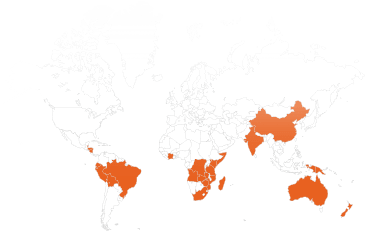
Kaya’s history of operating across 20+ countries through a decade of global disruption, including pandemic, political change, and natural events, reflects an organization that has been tested and has maintained its commitment to participant safety and community integrity throughout. For advisors building or reviewing international program partnerships, that track record is the data point that matters most.
Responsible travel is a standard of practice, not a marketing category. And in an uncertain world, it is also a competitive advantage for institutions whose students deserve to know that someone is paying attention. Explore Kaya’s individual volunteer and internship placements or contact Kaya’s team to discuss how responsible programming can work for your institution.
Recent comments